Summary: Researchers introduced a streamlined, emoji-based screening tool designed to objectively measure the social development of preschool children. The research establishes a rapid, 9-question digital diagnostic framework for early childhood educators to evaluate children aged three to five.
By replacing complex, time-consuming assessments with a simplified visual scale, the project provides a highly reliable baseline to catch early developmental delays, allowing clinicians and teachers to deploy critical interventions during a child’s most formative years.
Key Facts
- The Power of Early Screening: Early diagnostics are paramount for childhood development, as a child’s foundational vocabulary and social skills heavily dictate their academic and behavioral trajectories through adolescence.
- The 9-Question Matrix: Developed by Professor Hermundur Sigmundsson, the test equips kindergarten teachers with nine targeted questions to rapidly assess a child’s social skills in real time.
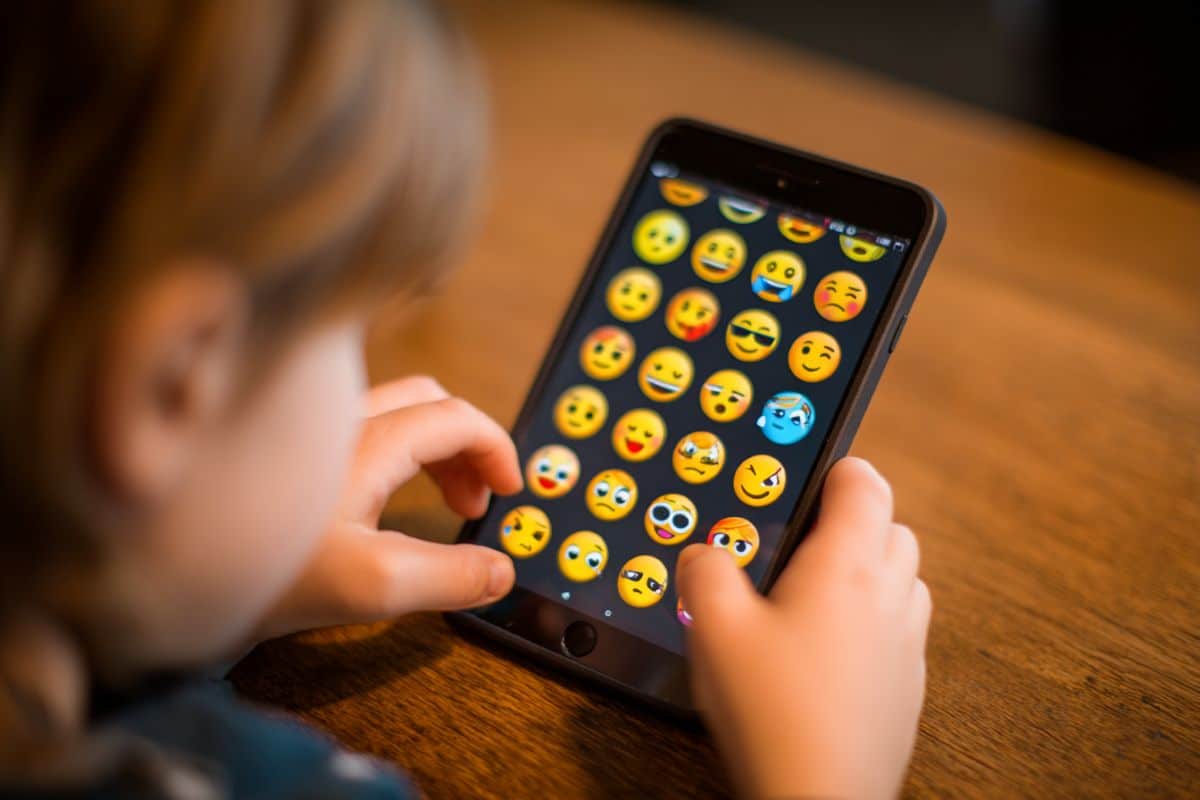
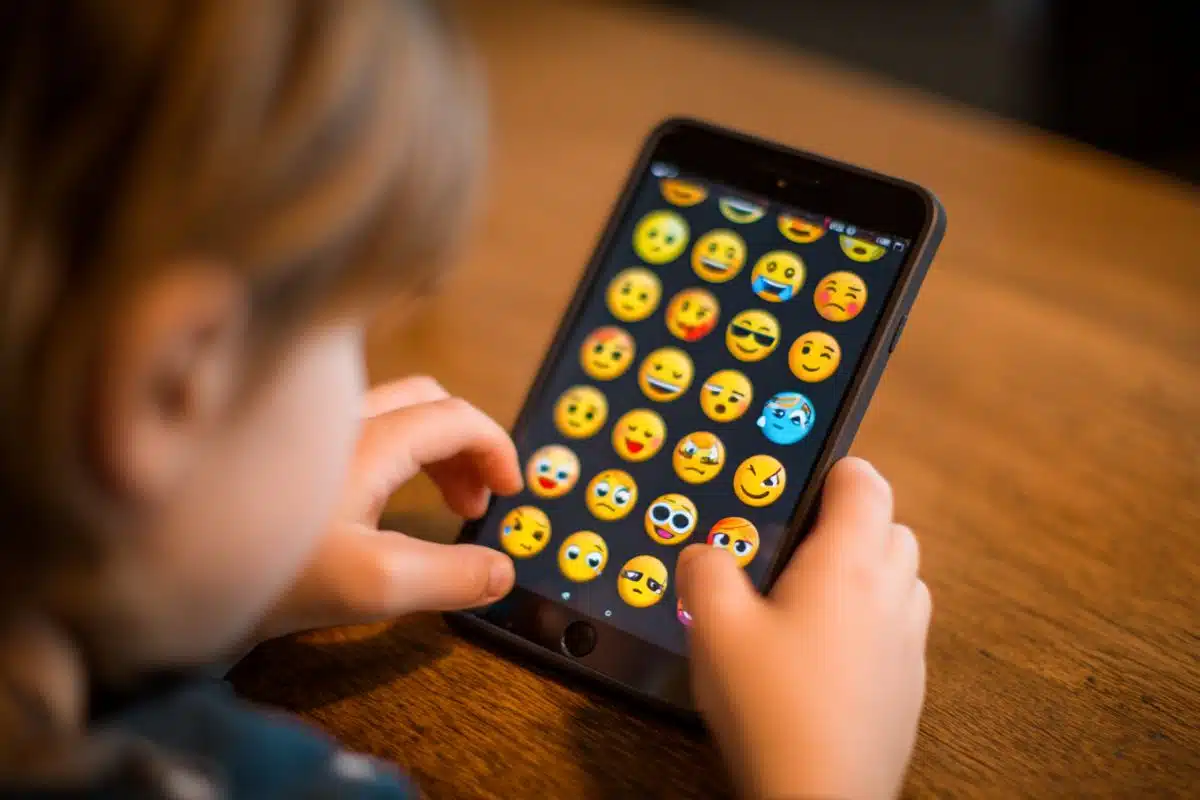
- The Visual Emoji Scale: To make the evaluation intuitive and friction-free, the framework utilizes an emoji-based Likert scale ranging from 1 to 5, where a 1 represents a very sad face, 3 is neutral, and 5 is a very happy face.
- High Inter-Rater Reliability: To verify the tool’s stability, independent early childhood educators cross-evaluated identical subjects. The comparisons revealed exceptional agreement between separate teachers, scoring a 0.89 on the Cronbach reliability scale.
- Empirical Field Validation: The researchers successfully validated the test on a cohort of 127 children in Iceland (ranging from ages 3 to 5, with an average age of 3.8 years), demonstrating strong statistical correlations across all evaluated questions.
- The Vocabulary Horizon: While the social skills metric is rapidly approaching clinical readiness, the research team is concurrently developing a companion early-stage vocabulary test in Iceland tailored for toddlers aged 18 to 24 months.
Source: NTNU
“I wanted to develop tests for social skills and vocabulary aimed at preschool children,” says Professor Hermundur Sigmundsson at the Department of Psychology at the Norwegian University of Science and Technology (NTNU).
The reason is that social skills and vocabulary are so important, especially for children and adolescents. Early screening is very important for early intervention if the child needs extra help.
The vocabulary test for18 to 24 month old children is still under development in Iceland, but the social skills test is well on its way to completion. Sigmundsson has a new article in Fronters in Education where he presents this test.
“Our new test measures social skills in children aged 3-5. The preschool teacher uses 9 questions to evaluate the child’s social skills.
The researchers tested this on 127 children in Iceland aged 3 to 5 years. The average was 3.8 years. Kindergarten teachers filled in the assessments.
Using emoji faces for the children’s test
The test is designed to be easy to use. The researchers used an emoji-based so-called “Likert scale” from 1 to 5, where 1 is a very sad face, 3 is a neutral face and 5 is a very happy face. The goal was to see if the test works, if it is stable and if it gives reliable results. The results are encouraging.
“We see that the test is well suited for children in this age group. All the questions relate to the overall result, and the correlations were good,” says Sigmundsson.
Appears to be reliable
To check whether different teachers arrive at approximately the same results, 10 children were assessed by two different early childhood educators. The comparison showed good agreement between the results from the two educators who assessed the children. The scale gives a score of 0.89 on the Cronbach scale, which indicates that it is reliable.
All in all, this looks promising, and it suggests that the test can be further developed.
“The next step is to try it on more children, and to check that it works just as well in larger and more representative groups,” says Sigmundsson.
Key Questions Answered:
A: Because when it comes to early childhood screening, simplicity is a superpower. Traditional psychological forms are often dense, time-consuming, and highly prone to subjective interpretation. By translating behavioral markers into a stark, visual 1-to-5 emoji scale (from very sad to very happy), NTNU has stripped away the jargon. It allows busy preschool teachers to quickly log clear, intuitive observations that map directly onto mathematical data.
A: In behavioral science, a Cronbach alpha score measures internal consistency and reliability, with 1.0 being absolute perfection. Scoring a 0.89 is an exceptionally high clinical baseline. It proves that the 9 questions aren’t random; they are deeply interconnected and stable. Crucially, it means that if two entirely different teachers evaluate the same child, they will arrive at the exact same objective score, eliminating guesswork.
A: The initial trial on 127 children yielded highly encouraging, stable results, but the project is still scaling up. Professor Sigmundsson noted that the next immediate milestone is testing the emoji framework across much larger, more diverse, and representative cohorts to ensure its universal accuracy. Once these macro-trials are complete, it can be widely distributed as a standard clinical app for classrooms globally.
Editorial Notes:
- This article was edited by a Neuroscience News editor.
- Journal paper reviewed in full.
- Additional context added by our staff.
About this social neuroscience and neurodevelopment research news
Author: Nancy Bazilchuk
Source: NTNU
Contact: Nancy Bazilchuk – NTNU
Image: The image is credited to Neuroscience News
Original Research: Open access.
“Social skills scale: aspects of reliability and validity of a new 9-item scale assessing social-skills” by Hermundur Sigmundsson. Frontiers in Education
DOI:10.3389/feduc.2026.1769238
Abstract
Social skills scale: aspects of reliability and validity of a new 9-item scale assessing social-skills
In this article, the psychometric properties of a new scale aimed at quantifying social skills are explored. The social skills scale is a quantitative, easy-to-administer measure designed to be context-independent.
The Social Skills Scale was tested on a sample of 127 children aged 3–5 years (mean age = 3.83, SD = 0.72) from Iceland, allowing for an initial examination of its applicability, internal consistency, and reliability.
Preschool teachers tested/evaluated the children. The findings indicate that the scale is suitable for use with children in this age range. All individual items showed positive correlations with the total score, with item-total correlation coefficients ranging from 0.35 to 0.76. The scale demonstrated high internal consistency, with a Cronbach’s alpha of 0.89 for the standardized items.
To assess inter-rater reliability, two independent observers (preschool teachers) evaluated a subset of 10 children (mean age = 4.04, SD = 0.21). The intraclass correlation coefficient (ICC) between the two raters was 0.88, indicating good reliability for this age group of Icelandic children.
These promising initial results support further development of the Social Skills Scale, including norming the instrument on a larger and more representative sample and carrying out further validation of the scale.