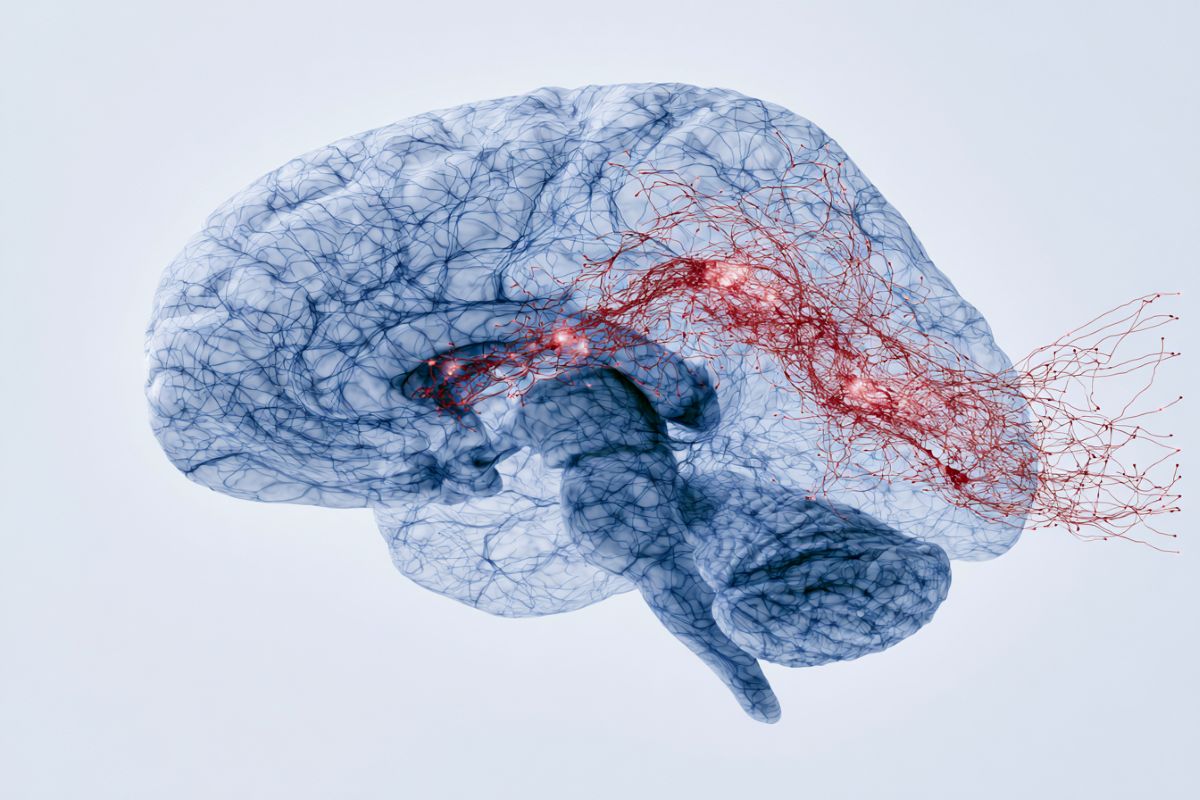
Summary: By comparing an autoimmune limbic encephalitis patient cohort against healthy control subjects using spatial memory tasks and structural neuroimaging, researchers discovered that object-location memory errors correlate directly with clinical apathy, a behavioral shift completely independent of clinical depression or overall cognitive decline.
Neurobiologically, patients exhibiting higher memory error rates and deeper apathy suffered from significant hippocampal atrophy alongside disrupted, weakened functional connectivity between the hippocampus and the prefrontal cortex. This discovery uncovers a shared neural pathway linking memory encoding to human motivation, providing crucial insights for treating apathy across neurodegenerative diseases like Alzheimer’s and Parkinson’s.
Key Facts
- The Object-Location Memory Deficit: Patients with autoimmune limbic encephalitis showed severe deficits in spatial-object binding tasks (pairing specific objects with their exact environmental locations) compared to age-matched healthy controls, directly reflecting hippocampal damage.
- Apathy Disconnected from Depression: The study unmasked a behavioral correlation exclusive to the patient group: object-location memory errors directly tracked with clinical apathy (a loss of goal-directed motivation). Crucially, this apathy link was entirely independent of depressive symptoms or general cognitive scoring, proving it stems from a distinct neural circuit.
- Structural & Functional Circuit Disruption: High memory error rates and severe apathy were mapped to two distinct neural markers:
- Hippocampal Atrophy: A measurable reduction in total hippocampal volume.
- Prefrontal Disconnection: A marked weakening in the functional and structural pathways connecting the hippocampus to the prefrontal cortex (the brain’s executive control and motivation hub).
- Broad Neurodegenerative Implications: Because memory loss and apathy frequently co-occur in neurodegenerative disorders like Alzheimer’s disease and Parkinson’s disease, identifying the hippocampal-prefrontal circuit provides a clear target for treating motivational deficits across dementia populations.
Source: SfN
People with autoimmune limbic encephalitis experience memory loss associated with damage to their hippocampus.
To advance understanding of the link between hippocampus damage and behavioral changes that occur from this condition, Bahaaeddin Attaallah, from Imperial College London, and Maria Raquel Maio, from the University of Oxford, led a study comparing an autoimmune limbic encephalitis patient population to healthy controls.
This work is published in Journal of Neuroscience.
Patients were unable to pair objects with specific locations in a memory task as well as healthy controls. Interestingly, in patients alone, making errors in the task was linked to apathy that was independent of depression symptoms or general cognitive ability.
Examining the brain mechanism of this link between memory impairment and apathy revealed that patients who made more errors had smaller hippocampi. These individuals also had weaker connections between the hippocampus and prefrontal cortex. This behavioral and mechanistic link was only observed in the patient population.
This work points to a brain mechanism in autoimmune limbic encephalitis patients that may explain their impaired memory and dampened motivation. Moreover, these findings may have implications for other conditions that affect the hippocampus, such as Alzheimer’s disease, in which memory loss and apathy can also occur together.
Speaking on future experimental plans, says Attaallah, “We are investigating the link between apathy and cognition in different cohorts with Parkinson’s disease and dementia using different methods, including large data analytics and experimental tasks. This will allow us to have a deeper understanding of how human memory and motivation overlap in these diseases.”
Key Questions Answered:
A: While depression is an affective mood disorder involving feelings of sadness, guilt, or helplessness, apathy is a primary deficit in goal-directed behavior, initiative, and emotional responsiveness, essentially a “dampening” of motivation. The study proved that the apathy observed in limbic encephalitis patients is biologically distinct from depression. It tracks specifically with object-location memory errors and hippocampal-prefrontal circuit degradation, independent of mood or overall cognitive score.
A: The hippocampus does not operate in isolation; it works in close coordination with the prefrontal cortex, the brain’s central executive office responsible for planning, decision-making, and motivation. To stay motivated and pursue a goal, the brain needs to recall past experiences, context, and spatial details from the hippocampus. When autoimmune inflammation shrinks the hippocampus and weakens its connection to the prefrontal cortex, the brain loses the ability to feed memory context into its motivational pathways, leading to clinical apathy.
A: Apathy is one of the most common and distressing symptoms in neurodegenerative conditions like Alzheimer’s and Parkinson’s disease, yet it is notoriously difficult to treat. By demonstrating that apathy is directly tied to structural shrinkage and circuit failure between the hippocampus and prefrontal cortex in limbic encephalitis, this research gives neuroscientists a precise anatomical target. Future therapeutic strategies can focus on reinforcing or stimulating this specific circuit to help restore motivation in broader dementia populations.
Editorial Notes:
- This article was edited by a Neuroscience News editor.
- Journal paper reviewed in full.
- Additional context added by our staff.
About this memory and apathy research news
Author: SfN Media
Source: SfN
Contact: SfN Media – SfN
Image: The image is credited to Neuroscience News
Original Research: The findings will appear in Journal of Neuroscience