Summary: Researchers revealed that thermal perception is governed by a singular, dual-directional neural community. By deploying high-resolution, live-tissue imaging in awake models, the team discovered that the overwhelming majority of temperature-sensitive cells are actually multi-functional receptors.
These neurons spike aggressively during cooling and simply tone down their baseline firing rates when the skin warms up, proving the brain decodes the full spectrum of non-painful thermal life using a single molecular dial.
Key Facts
- The Single Population Paradigm Unlocked: Rather than operating separate, parallel neural pipelines for opposing thermal states, the nervous system relies on a singular, dominant population of generalist cells that simultaneously signals both directions of temperature change.
- Bidirectional Baseline Firing Rules: Two-photon microscopy revealed that these multi-functional neurons use an elegant, dual-rate coding mechanism:
- When Cooled: The neurons rapidly increase their action potential firing frequency.
- When Warmed: The exact same neurons steadily suppress and decrease their baseline resting activity.
- Absolute Temperature Anchoring: The research team demonstrated that these cells do not merely detect the rate of change (how fast the skin is warming or cooling). Instead, they continuously report the absolute, actual temperature of the tissue, acting as high-precision biological thermometers.
- The TRPM8 Ion Channel Monopoly: By selectively blocking and activating specific temperature-sensitive proteins, the team made a startling discovery: knocking out TRPM8, long labeled as the body’s exclusive, single-purpose “cold receptor”—completely wiped out both the activation response to cooling and the dampening response to warming, proving a single molecular channel governs both sensations.
- Computational Model Validation: To cement their findings, the biophysicists engineered a computer model replicating TRPM8 channel kinetics. The simulation confirmed that minor, continuous adjustments to a single TRPM8 receptor are mathematically sufficient to perfectly reproduce the entire spectrum of warm and cool neural firing patterns observed in the live trials.
- Unlocking the Blueprint of Sensory Neuropathies: This architectural insight completely redefines how medical science approaches severe sensory disorders. By mapping how a healthy thermal system functions, the research provides a vital, mandatory foundation to understand, and eventually correct, the biological glitches that trigger debilitating conditions like chronic neuropathic pain, diabetic neuropathy, and chemotherapy-induced nerve damage.
Source: Helmholtz
Whether we hold a warm mug or step onto a cool floor, specialized nerve cells in the skin constantly report temperature to the brain. Scientists have long assumed that separate groups of sensory cells detect non-painful cool and warm temperatures.
Now researchers led by Drs. Phillip Bokiniec and Clarissa Whitmire in the Neural Circuits and Behavior Lab of Dr. James Poulet at the Max Delbrück Center have found that this assumption is too simplistic.

“Rather than relying on separate “warm” and “cool” sensors, we found that the nervous system appears to use one population of cells that signals both directions of temperature change,” explains Bokiniec, who shares first authorship of the study with Whitmire. Bokiniec is a now researcher in the Sensory Neural Coding lab of Dr. Clarissa Whitmire at the Queensland Brain Institute.
Using advanced imaging in mice, the team report in “Neuron” that most temperature-sensitive nerve cells are activated by cooling, and merely reduce their activity when the skin warms. The researchers also showed that these cells react to the actual temperature of the skin rather than simply detecting how much it has changed. This finding reshapes scientists’ understanding of one of the body’s most fundamental senses.
“Scientists have known about these neurons for years,” notes Poulet, “but they were thought to be relatively rare. What surprised us was discovering that they make up most of the temperature-sensing cells.”
Imaging neurons in live mice
The researchers developed a method to image hundreds of temperature-sensing nerve cells in the spinal sensory ganglia of awake mice over time. They gently warmed and cooled the animals’ paws while recording the activity of individual neurons using two-photon microscopy. They also performed this experiment in anesthetized mice and found the same result. This proved that that the anesthetic itself did not affect their results.
The team then selectively blocked or activated temperature-sensitive ion channels. Blocking the protein TRPM8 — long known as the body’s main sensor for detecting cool temperatures — eliminated both the response to cooling and the dampening effect that warming has on these nerve cells. This showed that a single molecular sensor can generate signals for both cool and warm, challenging the traditional view that separate receptors are needed for each sensation.
The team also developed a computer model to test their hypothesis. It showed that simply changing the activity of a TRPM8 was enough to reproduce the different response patterns seen in the experiments.
Understanding sensory disorders
Temperature sensation is essential for everyday life, but it is also disrupted in many medical conditions, including neuropathic pain, diabetic neuropathy, chemotherapy-induced nerve damage and disorders that cause abnormal sensitivity to cold. “Understanding how healthy temperature sensing works is a prerequisite for understanding what goes wrong in disease,” says Whitmire.
The researchers next plan to investigate how these signals are processed in the spinal cord, how painful temperatures are encoded, and whether the same principles apply in humans.
Key Questions Answered:
A: It was a highly logical, deeply entrenched engineering assumption. Because hot and cold are opposite physical sensations, it seemed natural that the nervous system would deploy separate, specialized wiring, one pipeline for cool inputs and another for warm inputs, to prevent the brain from getting confused. While researchers had occasionally spotted neurons that reacted to both, they were historically dismissed as rare anomalies. This study completely upends that belief by showing that these dual-directional cells aren’t exceptions at all; they are the definitive rule, making up the vast majority of our temperature-sensing machinery.
A: It downshifts or upshifts a continuous electrical dial. Instead of relying on a simple “On/Off” switch, these generalist neurons maintain a steady, resting baseline of activity at normal skin temperature. When the skin touches something cool, the neuron accelerates its activity, firing off rapid bursts of electrical signals. When the skin touches something warm, the exact same neuron does the opposite: it slows down, dialing back its baseline electrical output. The brain continuously monitors this up-and-down rhythm, decoding an increase in speed as cold and a decrease in speed as warmth.
A: This structural discovery completely changes the playing field for treating severe neuropathies, such as the agonizing nerve damage caused by chemotherapy or diabetes, where patients often experience intense, burning pain from a simple cool breeze. Historically, researchers looked for separate defects in “cold” or “warm” systems. By proving that a single molecular channel (TRPM8) and a single neural population govern both sensations, this research unmasks the exact point of failure. It shows that if this single system gets damaged or miscalibrated, the body’s entire thermal map collapses, giving pharmaceutical engineers a precise, unified target to design smart treatments that can restore normal sensory balance.
Editorial Notes:
- This article was edited by a Neuroscience News editor.
- Journal paper reviewed in full.
- Additional context added by our staff.
About this neuroscience research news
Author: Vera Glasser
Source: Helmholtz
Contact: Vera Glasser – Helmholtz
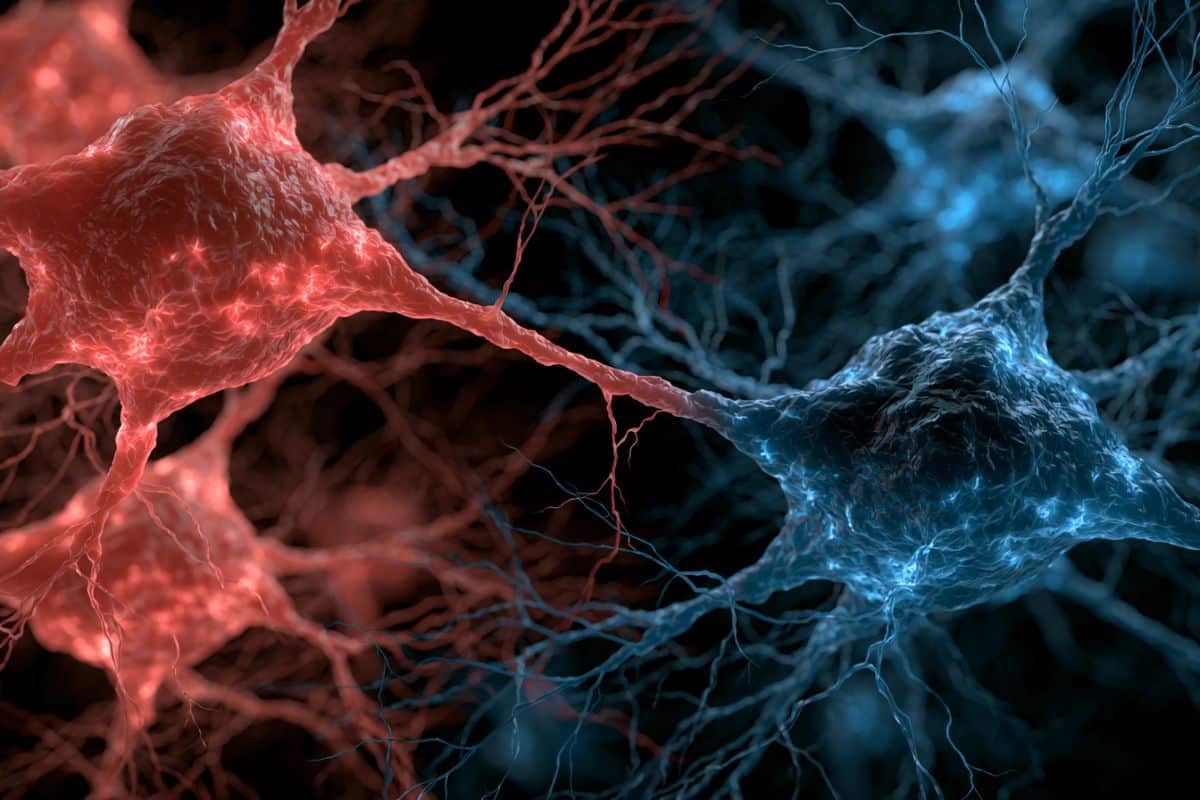
Image: The image is credited to Neuroscience News
Original Research: Open access.
“Population encoding of cool and warm by thermoreceptors” by Clarissa J. Whitmire, James F.A. Poulet, Phillip Bokiniec. Neuron
DOI:10.1016/j.neuron.2026.06.021
Abstract
Population encoding of cool and warm by thermoreceptors
Innocuous temperature sensation arises from the activity of primary afferent thermoreceptors, but how these neurons encode cool and warm at the population level remains unclear. Using two-photon in vivo imaging of the L4 dorsal root ganglion in awake and anesthetized mice, we show that the thermoreceptor population is strongly biased toward activation by cooling and suppression of activity by warming.
Although thermoreceptors activated by cool or warm only are present in the population, most show bidirectional responses and encode absolute temperatures in a graded manner. Pharmacological manipulations and computational modeling suggest that both activation and suppression could arise from a single cool-selective channel, TRPM8, with diverse response profiles explained by differences in TRPM8 conductance.
Our findings support a model in which innocuous temperature is largely encoded by a single functional class of thermoreceptor via graded, bidirectional changes in activity rather than exclusively by anatomically and functionally distinct cool and warm cells.