Summary: Alzheimer’s disease is pathologically characterized by the progressive accumulation of Tau, a structural protein that twists into toxic, suffocating tangles inside neurons. As this destructive Tau pathology migrates across interconnected brain networks, cognitive function systematically unravels. While scientists have long understood that Tau spreads from diseased cells to healthy neighbors, the exact molecular vehicle responsible for this intercellular cellular infection has remained a critical mystery in neurodegeneration.
A new study unmasked a surprising accomplice in this neurotoxic spread: a native brain protein called Arc. The study demonstrates that Arc, which normally functions as a vital messenger packet carrying information between healthy brain cells, is hijacked by toxic Tau.
By tracking mouse models and human brain tissue, the team discovered that toxic Tau hitches a ride inside Arc-containing microscopic bubbles, known as extracellular vesicles (EVs). When these bubbles migrate, they release “Tau seeds” that corrupt the healthy proteins of neighboring cells, starting the destructive cycle all over again.
Key Facts
- The Messenger Hijacked: Arc normally encapsulates itself in microscopic bubbles called extracellular vesicles (EVs) to shuttle molecular information between neurons. In Alzheimer’s, toxic Tau seeds aggressively bind to Arc to ride these bubbles into healthy tissue.
- The 99% Spread Reduction: In Alzheimer’s mouse models genetically engineered to lack the Arc protein, the extracellular bubbles contained virtually zero Tau, and the onward transmission of the disease was severely reduced to near-extinction.
- The Double-Edged Sword: Deactivating Arc entirely is not a viable clinical cure. The study revealed that when Arc is absent, toxic Tau becomes trapped inside the original sick neuron, causing it to accumulate to fatal thresholds and die significantly faster.
- The “Mid-Flight” Target Strategy: Because Arc release helps original sick cells stay alive longer by purging excess waste, the researchers conclude that the ideal therapeutic approach is to design drugs that intercept and destroy Tau-containing EVs “mid-flight” in the extracellular space before they reach healthy targets.
- Human Tissue Cross-Validation: The team successfully isolated identical, twin-loaded Arc and Tau extracellular vesicles within post-mortem human brain tissue, indicating that this exact propagation mechanism drives clinical human dementia.
- Commercialization Footprint: Senior author Dr. Jason Shepherd is a co-founder of VNV, LLC and holds stock in Aera Therapeutics, Inc., companies actively licensing intellectual property around Arc capsids for future target-delivery technologies.
Source: University of Utah
Alzheimer’s disease is driven by a buildup of a toxic protein called Tau that kills neurons. As toxic Tau spreads to new regions of the brain, symptoms become worse and ultimately fatal.
Now, researchers have discovered that, in mice, a brain protein called Arc helps spread Tau from sick brain cells to healthy ones.
If therapies could be designed to target the spread, they could be a powerful tool to stop Alzheimer’s disease from getting worse.

“I’m excited by the fact that we’ve identified a new way of potentially stopping the progression of Alzheimer’s disease,” says Jason Shepherd, PhD, professor of neurobiology at University of Utah Health and senior author on the study.
The results are published in Cell.
A deadly hitchhiker
By studying a mouse model of Alzheimer’s disease with and without Arc protein, the research team found that Arc is needed for toxic Tau to spread.
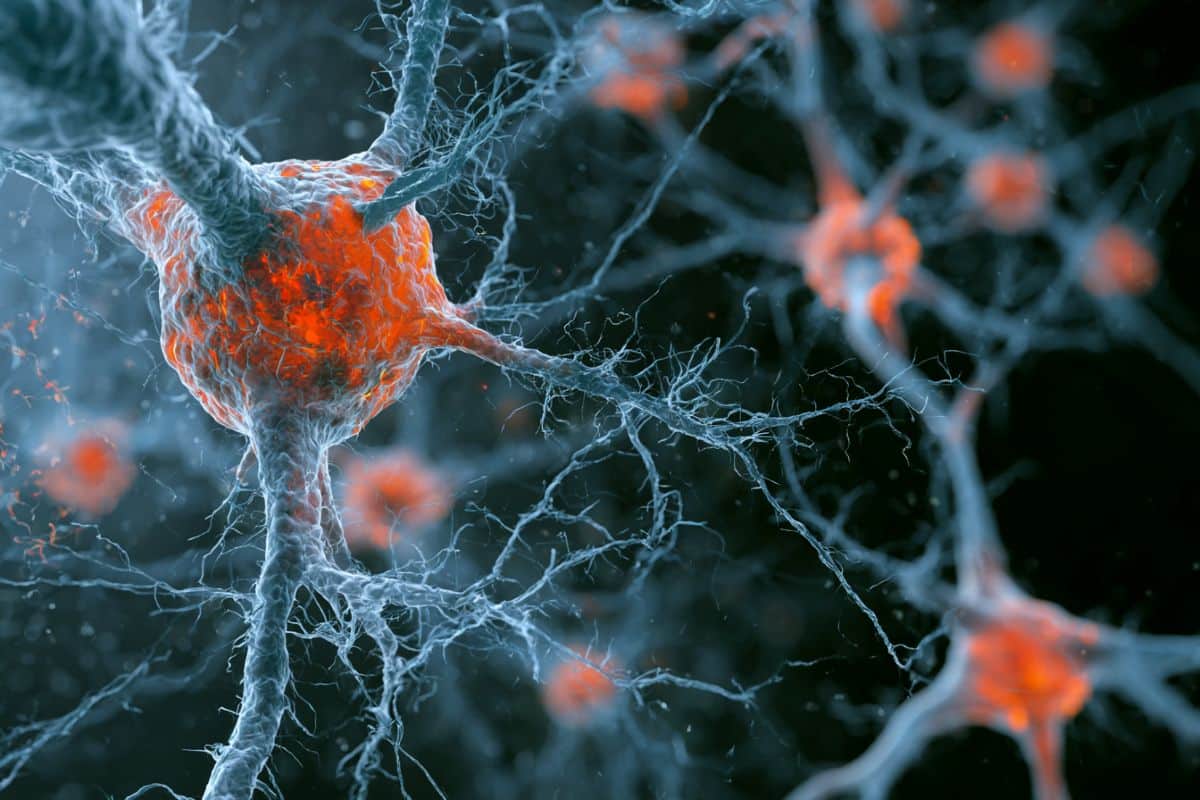
Arc normally serves as a vital messenger between brain cells: it wraps itself up in a microscopic bubble, called an extracellular vesicle or EV, that floats from one neuron to the next, carrying important information. But toxic Tau can stick to Arc to hitch a ride from a diseased neuron to a healthy one.
All brain cells, healthy and unhealthy, contain Tau. But in Alzheimer’s disease, Tau starts clumping together into massive, sticky tangles inside neurons, ultimately killing the cells. Mitali Tyagi, PhD, postdoctoral research associate at Washington University in St. Louis and first author on the paper, who did the research while a neuroscience graduate student in the Shepherd Lab at U of U Health, compares Tau tangles to “glue monsters.”
“They glue together and block transportation within the neuron,” Tyagi explains. “But they can break down into smaller glue monsters, called Tau seeds, which can then get transferred to a new neuron. And once this Tau seed comes into contact with healthy Tau, it is able to corrupt it. So, the pathology starts all over again in a healthy neuron.”
In a mouse model of Alzheimer’s disease, the researchers found EVs containing both Arc and “sticky” Tau within the brain. These tiny bubbles of Arc and Tau could infect healthy cells and start new Tau tangles.
But in Alzheimer’s model mice that lacked Arc, their brain EVs contained barely any Tau and could no longer spread the disease to new cells. “When we removed Arc, we saw that the transfer of Tau was severely, severely reduced,” Tyagi says. “It was almost gone.”
A double-edged sword
While it may seem like blocking Arc could be a therapeutic solution for Alzheimer’s, the protein may also play a protective role in early stages of the disease. By getting rid of excess toxic Tau, Arc seems to help sick cells stay alive longer.
The researchers found that in mice that lack Arc and thus can’t eject toxic Tau from sick cells, those sick cells die faster.
“When Arc is absent, Tau becomes trapped inside neurons and accumulates to toxic levels. When Arc is present, Tau can be released in extracellular vesicles. While this helps reduce Tau buildup within the original neuron, the released Tau can be taken up by neighboring healthy neurons, promoting the spread of pathology,” Tyagi says.
This suggests that stopping toxic Tau from entering healthy cells could be a more effective therapeutic strategy than preventing Tau release from sick cells.
Future directions
The team found that, like in mice, human brain tissue also contains EVs that include both Arc and Tau, suggesting that Tau likely spreads in a similar way in people. However, the researchers caution that more work is needed before a therapy is possible.
“Most of the work we’ve been doing is in mice, not in humans,” Shepherd says. “We have some clues that whatever is happening in these mice could also be happening in humans, but we don’t know that yet. And we’re far away from saying that we’re developing a treatment for anything. But it could open new avenues to get to that point.”
The team is especially excited by the possibility that future therapies might block toxic Tau-containing EVs “mid-flight,” after they’ve been ejected from sick cells but before they can infect healthy ones. Such therapies wouldn’t repair existing damage to the brain but might prevent the disease from progressing.
“If we could target these particular EVs, that would be a really useful therapy strategy,” Shepherd says. “For someone with early-onset Alzheimer’s or dementia, if we could stop the spread, then we could prevent further damage and cognitive decline.”
Funding:
This work was supported by the National Institutes of Health, including the Director’s Office Transformative Research Award (R01 NS115716), the National Institute of Neurological Disorders and Stroke (DSPAN F99), and the National Institute on Aging (AG073236), the Chan-Zuckerberg Initiative Ben Barres Early Acceleration Award, the Alzheimer’s Association, the McKnight Brain Disorders Award, the Jon M. Huntsman Presidential Endowed Chair fund, the Max Planck Society, AIRC IG 26229, PRIN 2022EMZJL4, the Rainwater Foundation, the JPB Foundation, and the Cure Alzheimer Fund. The Massachusetts Alzheimer’s Disease Research Center, supported by the National Institute on Aging (P30AG062421) provided human samples.
Shepherd is a co-founder of VNV, LLC and holds stock in and is a consultant for Aera Therapeutics, Inc., which licenses intellectual property and patents that include Arc capsids.
Key Questions Answered:
A: Arc is an evolutionary marvel; it behaves like a domesticated virus, wrapping itself up in tiny microscopic bubbles called extracellular vesicles to float from one neuron to the next, carrying important memory information. Think of these bubbles as public transport buses traveling between cells. In a brain with Alzheimer’s disease, toxic Tau breaks down into tiny, infectious chunks called “Tau seeds.” These seeds discover they can easily hitch a ride on the Arc bus. Arc continues to do its normal job of launching these bubbles, completely unaware that it is acting as a Trojan horse delivering toxic cargo directly into healthy, unsuspecting neighboring cells.
A: It sounds like a simple solution: remove the bus, and the disease can’t travel. However, the Salk and Utah research teams found that Arc is actually a double-edged sword. When they completely removed Arc from mice, the toxic Tau became permanently trapped inside the original sick neurons. Without the ability to eject its excess toxic waste, the interior of the neuron choked, and the sick brain cells died dramatically faster. This means completely shutting down Arc acts as a poison to the existing sick networks.
A: The most exciting avenue is targeting the toxic bubbles “mid-flight.” Instead of stopping the sick cell from releasing the Arc-Tau bubble, or trying to repair neurons that are already dead, a future treatment could deploy targeted antibodies or synthetic molecules into the extracellular space between brain cells. These therapies would float in the fluid, specifically tracking and neutralizing the infected bubbles after they have been ejected from a sick cell, but before they can hook into and corrupt a healthy neighbor. For someone diagnosed with early-onset dementia, stopping this spread “mid-flight” could successfully halt the disease in its tracks, preventing further cognitive decline.
Editorial Notes:
- This article was edited by a Neuroscience News editor.
- Journal paper reviewed in full.
- Additional context added by our staff.
About this neurology and genetics research news
Author: Sophia Friesen
Source: University of Utah
Contact: Sophia Friesen – University of Utah
Image: The image is credited to Neuroscience News
Original Research: Open access.
“Arc mediates intercellular tau transmission via extracellular vesicles” byMitali Tyagi, Eric de Hoog, Matthew Grega, Kaelan R. Sullivan, Alicia C. Walker, Radhika Chadha, Ava Northrop, Balázs Fábián, Gerhard Hummer, Monika Fuxreiter, Bradley T. Hyman, Jason D. Shepherd. Cell
DOI:10.1016/j.cell.2026.06.008
Abstract
Arc mediates intercellular tau transmission via extracellular vesicles
Tau pathology spreads cell to cell, but the mechanisms of intercellular tau transmission remain unclear. We find that the neuronal gene Arc is critical for the release of tau in neuronal extracellular vesicles (EVs) via a direct protein-protein interaction. Brain EVs purified from transgenic rTg4510 mutant tau mice (rTgWT) crossed with Arc knockout mice (rTgArc KO) contain less tau and reduced tau seeding potential. Both Arc and tau are co-packaged in mouse and human brain-derived EVs.
Moreover, Arc levels in brain-derived EVs isolated from human Alzheimer’s disease (AD) brains show a strong positive correlation with phosphorylated EV-tau levels. rTgArc KO mice have increased accumulation of intracellular tau and a modest increase in cell toxicity early in disease progression.
Strikingly, intercellular tau transmission is almost absent in Arc KO mice. These results show that Arc is critical for the packaging of tau in EVs, which plays a significant role in intercellular tau transmission.