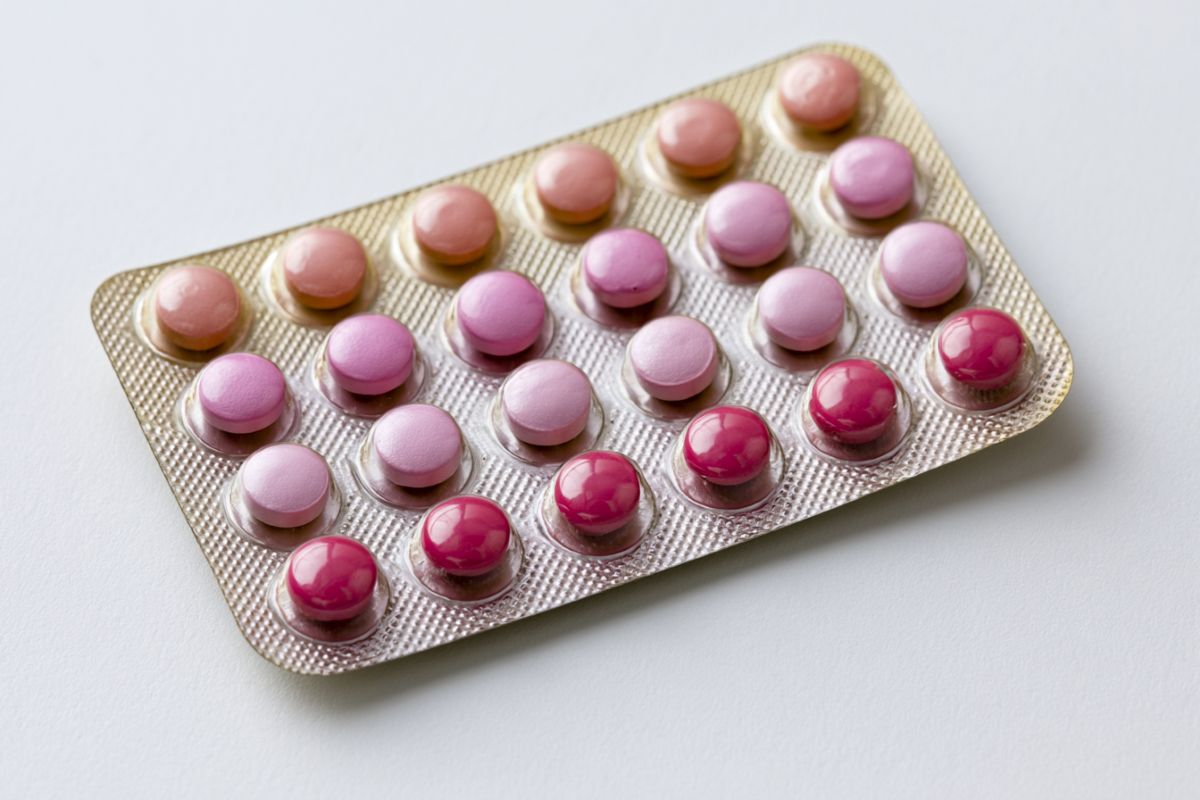
Summary: Researchers established a direct link between combined oral contraceptives and an increase in binge-eating symptoms, marking the first large-scale investigation into how birth control pills affect eating behavior. The study tracked 422 women from the MSU Twin Registry over 49 consecutive days. By comparing the participants’ behavior during weeks on active hormone pills (containing synthetic estrogen and progestin) against weeks on inactive placebo pills, the team observed significantly elevated levels of emotional eating, overconsuming food in response to negative emotions, while on the active hormones.
This surge was consistent across the entire sample, including women with a history of clinical binge eating. The risk was not universal; synthetic hormones heightened vulnerability primarily in individuals with preexisting risk factors.
The study revealed a powerful therapeutic caveat: the simple act of daily self-monitoring and logging eating habits successfully mitigated these hormone-driven spikes, paving the way for highly personalized approaches to women’s reproductive health.
Key Facts
- Synthetic Hormone Spikes: Combined oral contraceptives containing synthetic estrogen and progestin significantly increase emotional eating symptoms during active pill phases compared to placebo weeks.
- First Large-Scale Trial: This project represents the first comprehensive, large-scale longitudinal study to track daily fluctuations in binge-related eating patterns tied to oral contraceptive cycles.
- Registry Cohort Tracking: Researchers evaluated 422 participants sourced from the Michigan State University Twin Registry over 49 consecutive days to observe micro-changes in behavioral patterns.
- Targeted Vulnerability: The surge in emotional eating does not affect all users uniformly; oral contraceptives remain safe for many, with elevated risks concentrated in women possessing underlying genetic or clinical predispositions.
- The Self-Monitoring Shield: Daily self-reporting of eating habits acted as an effective psychological intervention, significantly decreasing binge-eating episodes even during peak active hormone phases.
- Call for Personalized Medicine: Lead author Dr. Kelly Klump emphasizes that educating healthcare providers about these specific neurobehavioral risks will enable more tailored, individualized contraceptive prescriptions.
Source: Michigan State University
A new study from Michigan State University found increases in binge eating when taking hormone pills in the form of oral contraceptives — but not in all women. This is the first large-scale study of changes in binge-related symptoms with oral contraceptive use.
The longitudinal study tracked 422 women from the Michigan State University Twin Registry who were taking combined oral contraceptives or contraceptives that include both synthetic estrogen and progestin hormones.

These contraceptives include active pills that contain synthetic hormones including synthetic estrogen and progestin, as well as inactive pills, or hormone-free placebo pills. The inclusion of both active and inactive pills provided a unique opportunity for researchers to examine changes in binge eating when a woman was taking her active versus inactive pills.
For 49 consecutive days, the researchers tracked changes within women for emotional eating, a form of binge eating where individuals overconsume food in the presence of negative emotions.
The study, published in JAMA Network Open, found significantly increased emotional eating when women were taking active versus inactive pills. These findings were present in the full sample of women as well as in women who reported current or past histories of clinical levels of binge eating.
Previous research has suggested ovarian hormones (natural estrogen and progesterone) play a significant role in binge-eating risk in females. These new findings suggest that synthetic hormones in combined oral contraceptives may also heighten risk.
“These findings are important for highlighting the potential negative impact of combined oral contraceptives in women. Nonetheless, it’s important to note that not every woman in the study developed binge eating — they are safe for many women, and it’s likely that the risk is targeted to those with other risk factors,” said Kelly Klump, lead author of the study and MSU Research Foundation Distinguished Professor in MSU’s Department of Psychology.
“Future studies are needed to better identify who is at risk and inform personalized medicine approaches to women’s health.”
The study also found that the act of reporting on binge eating every day, otherwise known as self-monitoring, helped decrease binge eating for the participants in the study. These decreases were observed even when women were taking active hormone pills.
“We found that self-monitoring was an effective tool in mitigating risk for women in the study,” said Klump. “The more we can equip women with tools and educate medical providers about these risks, the more effective care can be given.”
By educating medical practitioners about the effects of combined oral contraceptives on binge eating and the value of self-monitoring, the researchers hope that a more personalized approach can help those at risk.
Key Questions Answered:
A: Ovarian hormones like natural estrogen and progesterone are deeply intertwined with the brain’s reward, mood, and appetite-regulation circuits, such as serotonin and dopamine pathways. When combined oral contraceptives introduce synthetic variants, they override natural cycles and alter this delicate neural chemistry. In individuals who are already vulnerable, this exogenous hormone surge disrupts homeostatic feeding signals, making them significantly more prone to using food as an emotional coping mechanism.
A: Absolutely not. The researchers emphasize that these pills remain entirely safe and highly effective for the vast majority of women. Oral contraceptives do not universally cause binge eating; instead, they act as a specific environmental and chemical trigger. The heightened risk is targeted toward a distinct subset of women who already possess underlying biological, genetic, or psychological vulnerabilities to disordered eating.
A: Self-monitoring is a cornerstone of Cognitive Behavioral Therapy. When a person logs their emotional states and food intake daily, it disrupts automatic, impulsive loops. Instead of mindlessly reacting to a hormone-driven emotional dip by binge eating, the act of tracking introduces a conscious pause. This self-awareness brings the prefrontal cortex, which is the brain’s executive control center, back online, allowing the individual to recognize the hormonal urge without necessarily acting on it.
Editorial Notes:
- This article was edited by a Neuroscience News editor.
- Journal paper reviewed in full.
- Additional context added by our staff.
About this neuropharmacology and binge eating research news
Author: Jack Harrison
Source: Michigan State University
Contact: Jack Harrison – Michigan State University
Image: The image is credited to Neuroscience News
Original Research: Open access.
“Combined Oral Contraceptive Use and Binge Eating” by Klump KL, Di Dio AM, Anaya C, Mikhail ME, Burt SA, Sisk CL, Keel PK, Katzman DK, Neale M, Ackerman LS, Clark SL, Culbert KM. Jama Network Open
DOI:10.1001/jamanetworkopen.2026.19047
Abstract
Combined Oral Contraceptive Use and Binge Eating
Importance
Previous studies suggest endogenous ovarian hormones significantly increase binge-eating (BE) risk in females. Approximately 85% of women use combined oral contraceptives (COCs) that mimic the riskiest hormonal milieu for BE (ie, elevated estradiol and progesterone postovulation). The effects of COCs on BE risk remain unknown.
Objective
To examine the associations of COCs with BE.
Design, Setting, and Participants
This population-based longitudinal survey study collected daily reports of COC active vs inactive pill use and BE across 49 consecutive days in women from the Michigan State University Twin Registry. Analyses examined within-person changes in a continuous measure of BE (ie, emotional eating [EE]) when women were using active hormone pills vs inactive pills. Data were collected from 2017 to 2024. Participants were women already using monophasic COCs. Analyses examined the full sample as well as women with clinically defined BE episodes. Data were analyzed from April 2024 to November 2025.
Exposure
COC pill type (active vs inactive pills).
Main Outcomes and Measures
The outcome of interest was within-person changes in EE between inactive vs active hormone pills, controlling for negative affect. Changes across 2 pill packs were examined for replication. Analyses also examined weight preoccupation (WP) as a control outcome, given its lack of past associations with ovarian hormones. Primary models focused on the full sample; sensitivity analyses examined women with clinically defined BE.
Results
A total of 422 women (mean [SD] age, 21.95 [3.10] years) were included in the full sample. Significant within-person increases in EE were observed in the full sample during active hormone vs inactive pills in both cycles (cycle 1: β = 0.11 [95% CI, 0.06 to 0.16]; cycle 2: β = 0.07 [95% CI, 0.04 to 0.10]). Increases were not mediated by changes in negative affect and were observed in the subsample of 51 women (mean [SD] age, 22.44 [3.57] years) with clinically defined BE episodes (cycle 1: β = 0.13 [95% CI, −0.07 to 0.33]; cycle 2: β = 0.12 [95% CI, 0.02 to 0.23]. Importantly, no significant changes in WP were observed across pill type, and post hoc analyses of negative affect as the outcome showed more modest COC outcomes.
Conclusions and Relevance
This intensive, daily survey study of COC use found a specific association of active COC pills with risk for EE. Future studies are needed to identify for whom COCs are most risky to inform personalized medicine and identify contraceptive options that may be less likely to impact BE or EE.