Summary: Researchers identified the first major genetic cause of primary hyperhidrosis. By evaluating the genetic blueprints of over 180 patients, the international research team traced the disorder to explicit mutations within the Nav1.8 sodium ion channel. Instead of acting as a tightly regulated biological gate, this channel remains pathologically stuck open in affected individuals.
This permanent gate defect keeps the autonomic nervous pathways that govern the sweat glands in a state of unrelenting overstimulation.
Key Facts
- The Nav1.8 Ion Channel Gate Defect: The team’s molecular screens isolated recurrent genetic defects in the Nav1.8 ion channel, a specialized protein pore responsible for gating electrical impulses across the nervous system. In primary hyperhidrosis, this biological gate is genetically locked in a wide-open configuration, creating a permanent current leak that overstimulates autonomic pathways.
- Validating the Emotional Trigger Loop: This structural nerve defect explains why patients experience rapid, explosive sweating episodes in response to minor emotional or stress-related triggers. The underlying cause is not psychological; rather, the pre-existing electrical hyperexcitation in the nerves causes them to wildly overreact to routine autonomic signals.
- Reversible Preclinical Reversal: In transgenic models bearing the Nav1.8 mutation, the team observed severe localized sweating matching the human clinical profile. Crucially, the administration of a targeted pharmacological blocker engineered to plug the overactive channel resulted in a significant, immediate, and fully reversible reduction in sweat production.
- Genetic Complexity & Alternative Pathways: Demonstrating the intricate nature of the disease, the researchers identified a unique patient who exhibited typical hyperhidrosis symptoms despite carrying an inhibitory nerve mutation. Deeper analysis revealed a second, compensatory mutation located directly within a localized water channel inside the physical sweat gland itself. This proves that hyperhidrosis is a multi-pathway disorder where different biological errors can converge to create the same overactive profile on the skin.
- Moving Past Invasive Sympathectomies: Currently, individuals managing intractable hyperhidrosis must resort to highly invasive surgical procedures, such as an endoscopic thoracic sympathectomy, where surgeons physically cut the sympathetic nerve chains inside the chest. While effective, this carries a high risk of permanent side effects like severe compensatory sweating elsewhere on the body. Isolating the Nav1.8 channel allows for the development of localized topical blockers or precise systemic therapies.
- A Rational Blueprint for Drug Repurposing: The validation of the Nav1.8 mechanism provides a clear biological explanation for why certain existing medications provide relief. Preclinical screenings showed that therapies targeting cholinergic transmission or overall neural excitability effectively lowered sweat output. This also provides a clear scientific context for anecdotal patient reports concerning the use of cannabis products, as specific cannabinoids are known to interact with peripheral voltage-gated sodium channels.
- Broader Dysautonomia Implications: Because sweating is one of the most visible and easily measured outputs of the autonomic nervous system, the VUB and Johns Hopkins teams emphasize that this research serves as a vital model for broader autonomic disorders. The discovery opens new avenues to investigate whether similar ion channel mutations drive other forms of post-viral or chronic dysautonomia.
Source: VIRJE
An international research team led by Prof. Dr Frank Bosmanbs (Vrije Universiteit Brussel) has discovered a major genetic cause of hyperhidrosis (chronic and excessive sweating).
The study, published in the scientific journal Science Advances, provides strong evidence that a genetically determined form of hyperhidrosis arises from overstimulation of the nerves that control the sweat glands.
The discovery removes the stigma surrounding the condition and paves the way for targeted treatments using existing medicines.

Excessive sweating affects an estimated 2 to 5 percent of the population. The symptoms are far more severe than mere ‘awkward discomfort’. Patients sweat so profusely that they have to change their clothes several times a day. The impact on daily life is enormous.
Many patients avoid social contact, feel deeply ashamed and develop depression. Yet the condition is still too often dismissed as a superficial skin problem, meaning patients encounter a lack of understanding and do not receive the right care.
An overactive ‘thermostat’ in the nerves
Bosmans’ team spent ten years searching for answers to this problem, in collaboration with Johns Hopkins University. By analysing the DNA of more than 180 patients, they discovered defects in a specific protein channel in our nerves: the Nav1.8 ion channel.
This channel normally functions as a biological gate that regulates electrical signals in the nervous system. In patients with hyperhidrosis, this gate is left too wide open due to a genetic predisposition. As a result, the nervous system that controls the sweat glands is constantly overstimulated.
The nerves are constantly in a state of activity, resulting in excessive sweating. This is consistent with the clinical picture in which sweating is often triggered by emotional or stress-related stimuli, without the condition being of psychological origin.
Strong evidence from experimental models
To substantiate the theory, the researchers developed an experimental model. As mice only sweat from their paws, the team spent two years developing a microscopic measurement method to count sweat droplets using an iodine-starch mixture.
Mice with the same genetic defect were indeed found to sweat excessively. As soon as the researchers administered a substance that blocked the overactive nerve signals, sweating decreased significantly and reversibly in the mouse model.
The genetic reality is, however, complex. The team also discovered a patient who had actually inherited an ‘inhibitory’ nerve mutation, but who nevertheless sweated excessively due to an additional, unique mutation in a local water channel within the sweat gland itself. This proves that hyperhidrosis is a condition in which different biological pathways can lead to the same overstimulation that becomes visible on the skin.
Hope for targeted therapy without unnecessarily invasive procedures
The discovery offers the prospect of better, more targeted treatments. Today, severe forms of hyperhidrosis are sometimes treated with procedures that sever the sympathetic nerve pathways in the chest.
Such treatments can be effective, but they are invasive, not suitable for everyone and can cause unwanted side effects. By gaining a better understanding of the biological cause, in-depth genetic and functional research may, in the long term, help to better predict in advance which patients are likely to benefit most from localised treatment of the sweat glands, systemic medication or nerve-targeted therapies.
A second important avenue is drug repurposing: the targeted re-evaluation of existing medicines based on the new mechanism. In the mouse model, several clinically relevant agents reduced excessive sweating, including treatments that act on cholinergic signalling – a way in which nerve cells communicate with one another – or on the excitability of nerve cells.
This also provides a biological context for patient reports regarding cannabis products, as some cannabinoids can influence sodium channels. This does not mean that these agents can already be recommended as standard treatment, but it does mean that the research lays a rational foundation for controlled clinical trials. In this way, the management of hyperhidrosis is shifting from symptomatic treatment towards a more mechanism-based approach.
Broader implications for the autonomic nervous system
The study places hyperhidrosis within a broader context of autonomic nervous system disorders. Sweating is a visible function of the autonomic nervous system and can therefore serve as a measurable indicator of biological dysregulation. Whether similar ion channel mechanisms also contribute to other forms of dysautonomia, for example following infections, requires further investigation.
For patients, the message is clear: primary hyperhidrosis is not merely a cosmetic problem or a matter of stress; for at least some patients, it is a genuine, biological and potentially treatable disorder of the nerves and sweat glands.
Key Questions Answered:
A: This is the exact paradox that long caused the medical community to misclassify hyperhidrosis as a psychological psychiatric condition. When you experience stress, your brain naturally fires a normal, routine pulse of adrenaline down your sympathetic nervous system, it’s the standard “fight-or-flight” response that tells your sweat glands to prepare to cool the body. In a healthy individual, this minor signal causes a tiny, barely noticeable amount of dampness. However, because a hyperhidrosis patient’s Nav1.8 nerve gates are genetically locked wide open, their electrical system is already sitting at a boiling point. The moment a routine emotional or stress signal hits that unstable grid, it triggers a massive electrical overload, forcing the sweat glands to wildly over-respond and pump out massive quantities of fluid.
A: Currently, when hyperhidrosis becomes completely unmanageable, patients are often forced into a drastic surgical option called an endoscopic thoracic sympathectomy. During this procedure, a surgeon deflates a lung, goes into the chest cavity, and physically cuts or clips the sympathetic nerve cords running along the spine. While it stops hand sweating, it is permanent, invasive, and frequently causes the body to panic and start sweating double the amount in other zones like the back or legs. By identifying the Nav1.8 channel as the specific electrical gate responsible, drug developers no longer have to destroy the entire nerve line. Instead, they can formulate targeted topical creams or precise pills designed to slide into the overactive channels and gently plug the leak, restoring normal balance without a single surgical incision.
A: It reveals that hyperhidrosis is a complex, multi-layered condition rather than a one-size-fits-all disease. While the majority of patients in the study suffered from an electrical gate issue in their nerves, the researchers discovered a patient who had a perfectly normal nerve grid but carried a unique mutation directly in a local water channel inside the physical sweat gland. This tells clinicians that the body can arrive at the exact same symptom of excessive sweating through completely different biological breakdowns. In the future, rather than treating every patient with the exact same lotion or pill, doctors will use rapid genetic testing to pinpoint whether a patient’s issue is electrical (in the nerves) or structural (in the glands), matching them to a targeted therapy built for their exact biological profile.
Editorial Notes:
- This article was edited by a Neuroscience News editor.
- Journal paper reviewed in full.
- Additional context added by our staff.
About this genetics and neurology research news
Author: Koen Stein
Source: Vrije Universiteit Brussel
Contact: Koen Steine – Vrije Universiteit Brussel
Image: The image is credited to Neuroscience News
Original Research: Open access.
“A Neurocutaneous NaV1.8 Channelopathy Underlies a Genetic Subtype of Primary Idiopathic Hyperhidrosis” by Andreas S. Barth, Andrei Gurau, Beverly Lee, Brooke Dorman, Carley Blevins, Christine Kim, Corinne Boehm, Daniel Coleman, David Valle, Elizabeth Wohler, Filip Van Petegem, Frank Bosmans, Glenn Treisman, Hajime Orita, Hamza Khan, Hongrui Yi, Ife Shoyombo, J. U. Kang, Jinny Ha, Joshua Choi, Jolien De Waele, Jolien Vander Cruyssen, Kaitlyn Ecoff, Kristen Rodgers, Malcolm V. Brock, Margaux Theys, Maria Shishikura, Maxime Lammens, Michele Cervellera, Nara L. Sobreira, Peter C. Rowe, Ruslan I. Dmitriev, Shivani Shirodkar, Stephen B. Baylin, Suguru Yamauchi, Tae Hwan Chung, Takumi Iwasawa, Tetsu Fukunaga, Wasay Nizam, Yves Heremans, Yuping Mei. Science Advances
DOI:10.1126/sciadv.aed3221
Abstract
A Neurocutaneous NaV1.8 Channelopathy Underlies a Genetic Subtype of Primary Idiopathic Hyperhidrosis
Primary idiopathic hyperhidrosis (PIH) is a poorly understood disorder characterized by excessive sweating. We identify a genetically defined subset of PIH associated with rare coding changes in voltage-gated Na+ (NaV) channels.
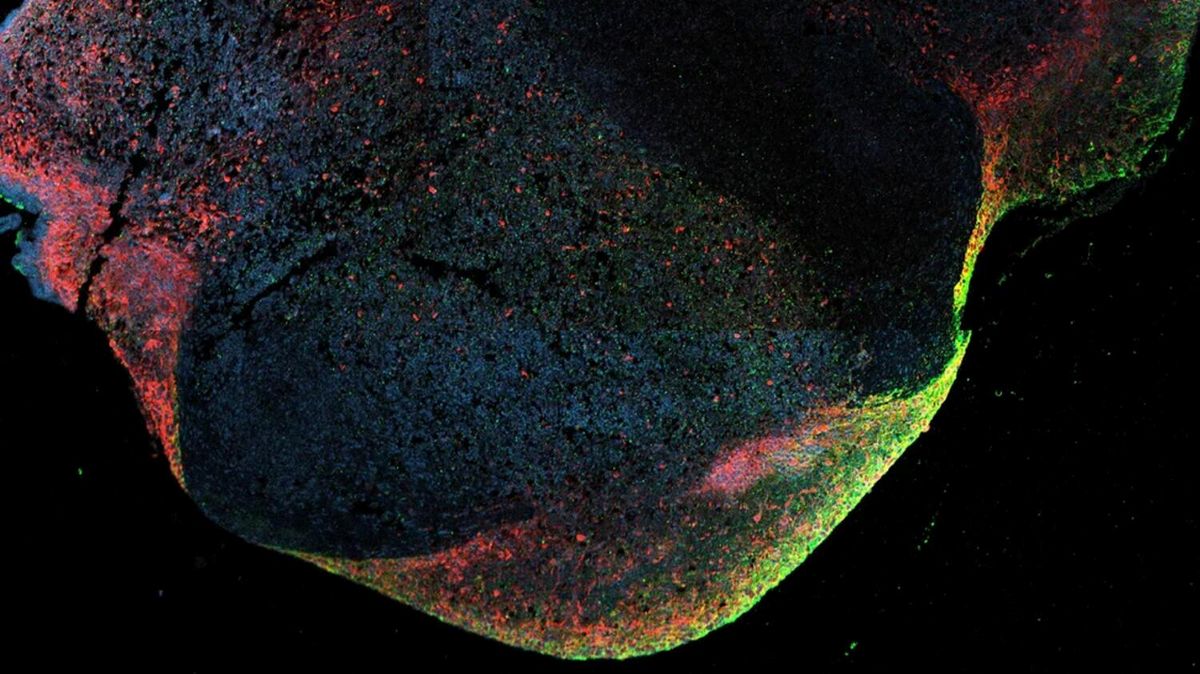
Whole-exome sequencing of hereditary PIH families revealed gene-level enrichment within the NaV channel family, with SCN10A (NaV1.8) most strongly implicated. A knock-in mouse carrying the clinically observed NaV1.8p.R14L substitution recapitulated excessive sweating. NaV1.8 was detected in a subset of postganglionic neurons in thoracic sympathetic ganglia in humans and mice, where p.R14L produced a gain-of-function profile that enhanced cholinergic responsiveness.
Excessive sweating in mutant mice was reversible with NaV channel inhibition, including clinically used agents and a NaV1.8-preferential compound.
Together, these findings define a targetable neurocutaneous channelopathy underlying a subset of PIH and support a model in which excessive sweating arises from either gland-intrinsic dysfunction or altered sympathetic drive, motivating stratified therapeutic approaches.