Summary: A new study has delivered the world’s first preclinical proof-of-concept for an mRNA vaccine targeting neuroblastoma, the deadliest form of childhood cancer. The research tackles a disease that accounts for 15% of all pediatric cancer deaths and has an 80% non-response rate to conventional therapies.
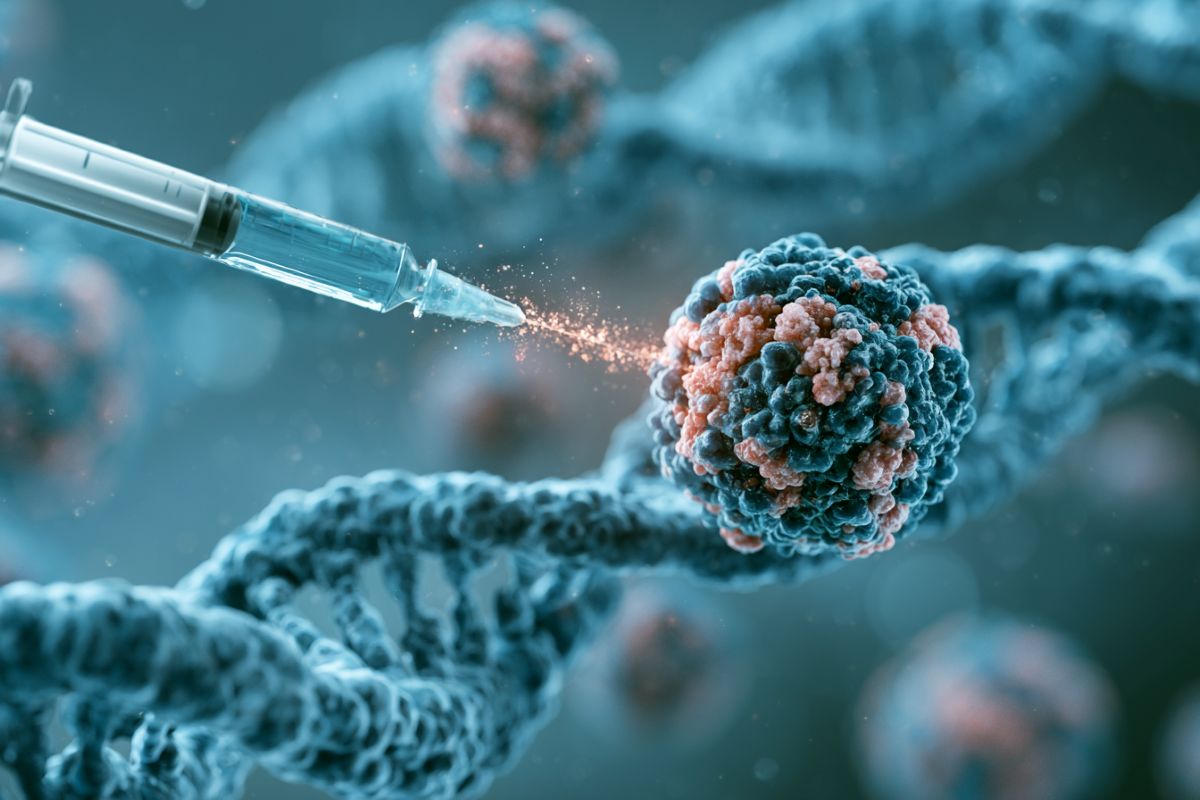
Utilizing an advanced delivery platform, the team engineered self-assembling peptide nanoparticles to transport mRNA directly to tumor sites. The vaccine trains the host immune system to recognize and attack Glypican 2 (GPC2), a specific protein heavily expressed on the surface of neuroblastoma cells. In preclinical models, this precision immunotherapy significantly reduced tumor size by 70% and successfully delayed aggressive tumor development by 10 to 11 days.
Key Facts
- 70% Tumor Shrinkage: The novel mRNA vaccine achieved a massive 70% reduction in neuroblastoma tumor volume during preclinical testing.
- Delayed Progression: The immunotherapy successfully disrupted aggressive cancer kinetics, delaying tumor development by 10 to 11 days.
- Targeting Glypican 2 (GPC2): The platform uses self-assembling peptide nanoparticles to train immune cells to pinpoint GPC2, a protein marker specific to these deadly childhood cancer cells.
- Modular “Lego” Design: The vaccine architecture is highly customizable, allowing scientists to swap components to tailor treatments to an individual child’s unique tumor profile.
- A High-Stakes Target: Neuroblastoma accounts for 15% of all childhood cancer deaths, with 80% of high-risk patients showing little to no response to current standard treatments.
Source: RCSI
A new study from RCSI University of Medicine and Health Sciences demonstrates a novel approach in anticancer vaccine development. Results present the first preclinical evidence to show the efficacy of an mRNA vaccine in targeting neuroblastoma, the deadliest childhood cancer.
Researchers, led by Dr Olga Piskareva, Senior Lecturer, RCSI Department of Anatomy and Regenerative Medicine, tested an mRNA vaccine, using peptide carriers for its effect on neuroblastoma tumours.

Results show that the vaccine, which helps the immune system recognise and fight neuroblastoma, delayed tumour development in preclinical models by 10-11 days and significantly reduced the tumour size by 70%.
Despite advances in therapy, neuroblastoma remains a leading cause of childhood cancer deaths, accounting for 15% of childhood deaths overall. Between five and ten cases are diagnosed in Ireland each year, with 80% of patients showing no significant response to current treatments.
Dr Piskareva commented on the findings: “The mRNA vaccine technology is like LEGO bricks. By combining different bricks, we can tailor the vaccine to the individual needs with high precision. This pilot study indicates promising potential in the development of anticancer vaccines for neuroblastoma, offering new hope for children and families suffering from the disease. We are at the beginning of the mRNA vaccine development road, but the first milestone has been successfully completed”.
Researchers applied a new approach to develop this vaccine, based on tiny self-assembling particles called peptide nanoparticles. These nanoparticles are designed to target Glypican 2 (GPC2), a protein found on the surface of neuroblastoma cells. Because GPC2 also appears in several other cancers, this approach has the potential to be adapted to treat a wider range of tumours, marking an important step forward for future cancer immunotherapies.
Neuroblastoma that comes back after initial treatment is particularly difficult to cure, as the cancer often becomes resistant to existing therapies. Further research into novel treatment strategies, such as those demonstrated in this study, could help address this challenge and offer better prognoses for those affected by neuroblastoma going forward.
Funding: The study was carried out in collaboration with School of Pharmacy at Queen’s University of Belfast and was funded by the Irish Research Council (IRC), Higher Education Authority (HEA), The Health Research Board (HRB), as well as The Conor Foley Neuroblastoma Cancer Research Foundation.
Key Questions Answered:
A: The vaccine works by utilizing tiny, self-assembling peptide nanoparticles to carry custom mRNA instructions into the body. These instructions teach the patient’s own immune cells to look for and destroy a specific protein called Glypican 2 (GPC2), which sits prominently on the surface of neuroblastoma cells. Once trained, the immune system can hunt down and eliminate the cancer cells while leaving surrounding healthy tissue unharmed.
A: Neuroblastoma is an incredibly aggressive cancer that accounts for 15% of all childhood cancer deaths. Its biggest danger lies in its ability to adapt; a staggering 80% of high-risk patients do not respond effectively to standard treatments, and if the cancer returns after initial therapy, it routinely develops a fierce resistance to traditional drugs. This makes finding a completely separate mechanism of action, like immunotherapy, absolutely vital.
A: Dr. Olga Piskareva used the LEGO analogy to highlight the modular, highly customizable nature of modern mRNA design. Because the vaccine’s delivery platform and genetic instructions are built in interchangeable segments, scientists can easily swap out pieces. If a tumor mutates or if they want to target a completely different type of cancer that expresses a different protein, they can seamlessly snap in a new target “brick” to create a personalized treatment.
Editorial Notes:
- This article was edited by a Neuroscience News editor.
- Journal paper reviewed in full.
- Additional context added by our staff.
About this genetics and brain cancer research news
Author: Laura Anderson
Source: RCSI
Contact: Laura Anderson – RCSI
Image: The image is credited to Neuroscience News
Original Research: Open access.
“mRNA vaccination using peptide nanoparticles triggers a strong immune response against endogenous GPC2 in a murine neuroblastoma model” by Ellen King, Chayanika Saha, Rabia Saleem, Binyumeng Jiang, Eve O’Donoghue, Federica Cottone, Helen O. McCarthy, Olga Piskareva. Molecular Therapy Oncology
DOI:10.1016/j.omton.2026.201244
Abstract
mRNA vaccination using peptide nanoparticles triggers a strong immune response against endogenous GPC2 in a murine neuroblastoma model
Neuroblastoma is an aggressive pediatric solid tumor that arises during embryonic development and contributes to 15% of cancer-related deaths in children. To date, neither experimental nor clinical trial data on an mRNA vaccine for neuroblastoma have been published, highlighting a significant gap in the anticancer vaccine development pipeline.
This study presents the first mRNA vaccine for the treatment of neuroblastoma. We explored the self-assembling peptide RALA for delivering mRNA encoding glypican 2 (GPC2), a potent tumor-associated antigen in neuroblastoma. These data outline rigorous in vitro characterization of vaccine nanoparticle formulations, cellular uptake, and functionality. Immunization of mice with RALA/mGPC2 generated an antigen-specific cellular immune response against GPC2, with significant increases in IFN-γ and IL-2 expression by splenocytes and TNF-α expression by CD4+ and CD8+ T cells.
Immunization delayed tumor development by 10–11 days and reduced tumor volume by 70% compared with unvaccinated controls in a subcutaneous murine model of MYCN-amplified neuroblastoma. This work demonstrates the therapeutic potential of the RALA/mGPC2 vaccine for treating neuroblastoma.
Additionally, GPC2 is upregulated across multiple adult and pediatric cancer subtypes, establishing this vaccine as an attractive immunotherapy with far-reaching potential.