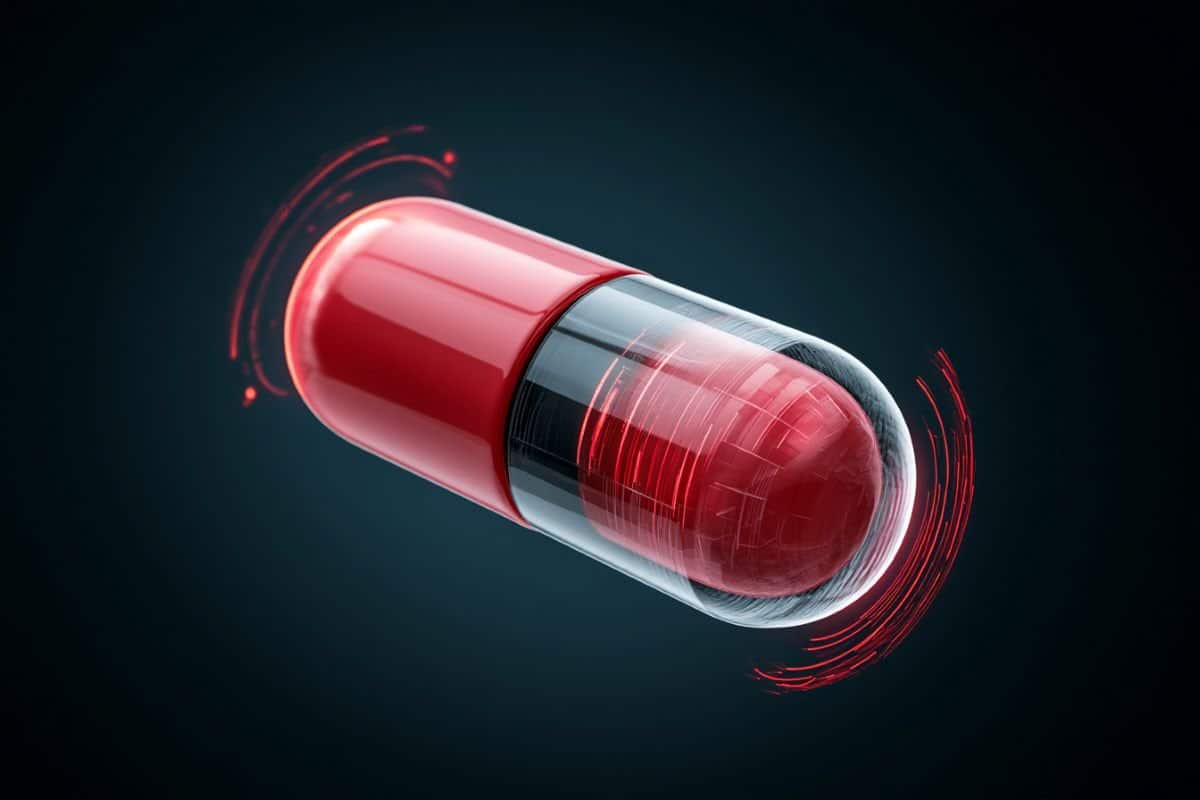
Summary: Researchers utilized an innovative, remotely controlled vibrating capsule to predict relapse risk in patients with anorexia nervosa. The research demonstrates that individuals recovering from the disorder suffer from altered interoception, meaning they possess a damaged ability to accurately detect, process, and trust internal gut sensations.
The team evaluated 62 weight-restored females following hospital discharge alongside 57 healthy controls. By tracking brain, heart, and gastric rhythms during stomach vibrations, researchers discovered that anorexia nervosa participants were significantly less accurate at sensing bodily cues, frequently operating under a neural bias that expected no sensation to occur.
Patients who were most biased toward ignoring these visceral signals faced the highest risk of relapse within a six-month follow-up period. Because these communication breakdowns persist even after a patient reaches a healthy body weight, these gut-brain metrics offer a vital, objective biomarker to help clinicians track treatment response and safeguard vulnerable patients during recovery.
Key Facts
- High Relapse Rates: Up to 50% of patients treated for anorexia nervosa experience a clinical relapse within one year of successfully restoring their body weight.
- The Vibrating Pill Trial: Researchers utilized an ingestible, wireless capsule to deliver targeted, gentle vibrations to the stomach lining, measuring objective physiological responses in real time.
- Altered Interoception Circuits: Patients with anorexia nervosa do not willfully ignore internal signals; rather, their nervous system processes gastric sensations differently, making them harder to perceive.
- Predicting Clinical Relapse: Follow-up evaluations over a six-month post-discharge period revealed that a strong perceptual bias toward ignoring gut sensations directly correlates with higher relapse rates.
- Persistence Beyond Weight: The underlying neurological disconnect between the brain and the gastrointestinal tract remains highly disrupted even after a patient reaches a physically healthy weight.
- Objective Biomarker Potential: These computational gut-brain measures provide doctors with a tangible tool to assess risk and customize long-term psychiatric care.
Source: UCLA
A vibrating pill could help doctors determine if a patient with anorexia nervosa may have a higher risk of relapse, according to a new study by UCLA Health.
Anorexia nervosa is a psychiatric disorder characterized by persistent restriction of food intake, fear of gaining weight and distorted body image, often leading to significantly low body weight. Relapse rates for people treated for the disorder are alarmingly high at up to 50% within one year of the person restoring their body weight. The disorder has one of the highest mortality rates of any psychiatric disorder, with suicide being the leading cause of death.

Although restoring body weight is a central goal of treatment, many patients continue to struggle after reaching a healthy weight. However, the mechanisms underlying the disorder are not well understood, and there is a lack of objective biomarkers to help doctors track how a patient responds to treatment.
In a study published in JAMA Psychiatry, UCLA researchers used an ingestible, vibrating capsule that not only helped to predict the risk of relapse but also shed new light on how the disorder affects the nervous system.
“People with anorexia nervosa do not simply ignore signals from the body,” said the study’s senior author Dr. Sahib Khalsa, psychiatrist and neuroscientist who serves as Director of Anxiety Disorders Research and Associate Professor in Residence at the UCLA Semel Institute for Neuroscience and Human Behavior.
“Rather, their nervous system may process gut sensations differently, making those signals harder to detect, trust and learn from. Over time, that may contribute to the persistence of symptoms even after weight is restored.”
Khalsa and his team recruited 62 women and girls hospitalized with anorexia nervosa whose weight had been restored to healthy levels and 57 healthy controls. The participants swallowed a vibrating capsule that researchers could remotely control to produce gentle vibrating sensations of varying intensity in the stomach. During the experiment, participants were asked to press a button whenever they felt a vibration.
Researchers simultaneously monitored brain, heart and stomach rhythm activity. Participants also self-reported hunger levels and other bodily sensations. Researchers then performed follow-up evaluations with the anorexia nervosa participants for six months after hospital discharge.
The data were analyzed using a computational model designed to estimate how strongly participants expected to feel stomach sensations, how much their brains relied on incoming bodily signals and how quickly they updated their expectations when signals were present or absent.
Compared with healthy individuals, anorexia nervosa participants were less accurate at detecting subtle stomach sensations, more likely to believe that no sensation was occurring even when the pill was vibrating, and slower to revise those expectations when stomach signals were present.
“In essence, some individuals with anorexia nervosa appeared to enter the task expecting not to feel signals from the gut and were less likely to update those expectations when signals occurred,” Khalsa said.
Several of these gut-brain measures were associated with relapse risk during the six-month follow-up period. Anorexia nervosa participants whose perception was especially biased toward ignoring gut signals were more likely to relapse.
“One of the most striking findings was that these differences persisted even after weight restoration,” Khalsa said. “Recovery from anorexia nervosa isn’t just about restoring body weight. The underlying brain-body communication problems may remain and could contribute to relapse.”
Khalsa said these gut-brain measures could eventually serve as biomarkers that can help doctors to identify patients at higher risk of relapse and track whether treatments are improving how the brain processes bodily signals.
The researchers noted the findings need to be replicated in broader and more diverse populations before firm conclusions can be drawn.
Key Questions Answered:
A: Anorexia nervosa has long been treated primarily as a cognitive and behavioral disorder, but it is deeply tied to a breakdown in interoception, which is the brain’s internal map of bodily sensations. Because the stomach is a primary source of these signals, doctors needed a way to isolate and test gastric sensations without using food, which can trigger acute anxiety. The ingestible capsule allows researchers to send precise, controlled mechanical signals directly to the gut, letting them objectively measure exactly how well the nervous system detects and processes internal physical reality.
A: This is a description of a neurological processing glitch, not a conscious choice. Using computational modeling, researchers found that the brains of individuals with anorexia nervosa operate under a rigid expectation that the gut will not feel anything. When the pill vibrates, their brains fail to update that expectation. Essentially, the neural gating mechanism filters out the stomach’s signals, causing the patient to perceive an empty or inactive gut even when physical sensations are actively occurring.
A: Currently, reaching a target body weight is treated as the primary marker of short-term recovery, yet relapse rates remain dangerously close to 50%. This study proves that physical weight restoration does not automatically heal the damaged neural pathways between the brain and the gut. By using the vibrating capsule as a diagnostic biomarker tool, physicians can screen patients at discharge to see whose interoceptive circuits are still malfunctioning. Those showing severe sensory biases can be matched with specialized therapies, such as interoceptive exposure or biofeedback, before a relapse occurs.
Editorial Notes:
- This article was edited by a Neuroscience News editor.
- Journal paper reviewed in full.
- Additional context added by our staff.
About this neuropharmacology and eating disorders research news
Author: Will Houston
Source: UCLA
Contact: Will Houston – UCLA
Image: The image is credited to Neuroscience News
Original Research: Open access.
“Altered Gastrointestinal Interoception in Anorexia Nervosa Predicts Relapse” by Verdonk C, Mink K, Choquette E, Moseman SE, Mayeli A, Stewart JL, Paulus MP, Smith R, Khalsa SS. JAMA Psychiatry
DOI:10.1001/jamapsychiatry.2026.1301
Abstract
Altered Gastrointestinal Interoception in Anorexia Nervosa Predicts Relapse
Importance
Anorexia nervosa (AN) is a deadly psychiatric disorder with relapse rates approaching 50% after weight restoration. Disrupted gastrointestinal interoception may underlie persistent symptoms and relapse vulnerability.
Objective
To examine behavioral, computational, neural, and physiological markers of gastrointestinal interoception in weight-restored individuals with AN and test their association with relapse.
Design, Setting, and Participants
This crossover trial was a single-blind, within-participant, randomized (block-order) trial conducted at the Laureate Institute for Brain Research between August 2021 and February 2025. Participants were females with weight-restored restrictive AN and age- and sex-matched healthy comparators (HCs). All participants ingested a vibrating capsule that delivered counterbalanced blocks of normal- and enhanced-intensity gut stimulation. Behavioral detection performance, electroencephalography, peripheral physiology, and computational modeling were used to assess interoception.
Main Outcomes and Measures
Experimental-session measures included interoceptive accuracy, prior beliefs, interoceptive precision, learning rates, gastric-evoked potentials (GEPs), and hunger. Main clinical outcomes at 6 months included relapse status and symptom severity.
Results
The cohort included 62 female participants with weight-restored restrictive AN (mean [SD] age, 18.9 [4.5] years) and 57 age- and sex-matched healthy comparators (HCs; mean [SD] age, 20.7 [5.3] years). Six-month follow-up data were collected for 54 participants with AN. Compared with HCs, participants with AN showed lower perceptual accuracy (Cohen d = −0.98; 95% CI, −1.51 to –0.44; P = .001) and higher miss rates (Cohen d = 1.02; 95% CI, 0.55 to 1.48; P < .001).
Computational modeling revealed in the AN group stronger prior expectations that capsule vibrations would not be present (Cohen d = −0.31; 95% CI, −0.67 to 0.05; P = .05), greater shifts in interoceptive precision between blocks (Cohen d = 0.38; 95% CI, 0.02 to 0.75; P = .01), and learning asymmetries (vibration: Cohen d = −0.40; 95% CI, −0.77 to −0.04; P = .007; no-vibration: Cohen d = 0.35; 95% CI, −0.02 to 0.71; P = .01). GEP amplitudes did not differ by group but were correlated with accuracy and learning in AN. Capsule stimulation induced greater hunger increases in AN (interaction: η2p = 0.04, P = .04; AN: Cohen d = 0.94; 95% CI, 0.57 to 1.30; HCs: Cohen d = 0.40; 95% CI, 0.03 to 0.77).
At follow-up, relapse was predicted by initial priors (odds ratio [OR], 3.82; 95% CI, 1.02 to 15.91; P = .05), response bias (OR, 5.37; 95% CI, 1.15 to 32.04; P = .04), and stomach unpleasantness (OR, 5.73; 95% CI, 1.38 to 33.5; P = .03), while eating disorder symptom severity was predicted by miss rate (β = 1.05; R2 = 0.08; P = .05), difference in interoceptive precision (β = 5.84; R2 = 0.16; P = .004), and initial priors (β = −2.99; R2 = 0.09; P = .05).
Conclusions and Relevance
In this study of weight-restored females with AN, gastrointestinal interoception was disrupted across multiple domains, including reduced accuracy detecting gut signals, maladaptive priors, rigid learning, and abnormal hunger rating. Several interoceptive markers predicted relapse and symptom severity at follow-up. These findings support the use of ingestible mechanosensory probes and computational modeling as scalable tools to monitor treatment response and guide relapse prevention in eating disorders.
Trial Registration
ClinicalTrials.gov Identifier: NCT05111977